
Student

PhD Student
MRes in Speech, Language and Cognition
University College London
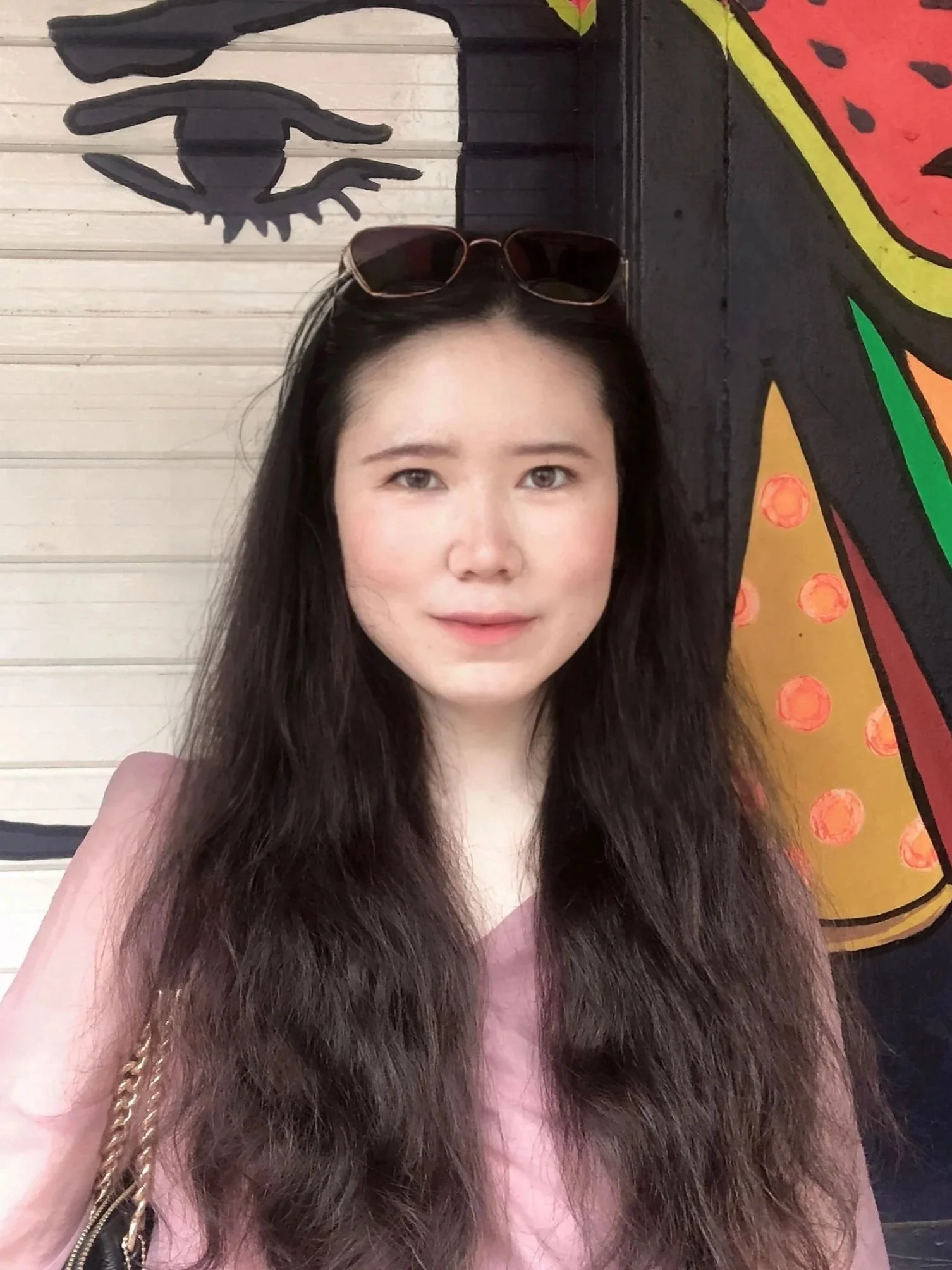
Longyun HU
My fascination with psycholinguistics was sparked by the film My Fair Lady, in which Audrey Hepburn’s character, Eliza Doolittle, profoundly alters social perceptions through mastering a new accent. This vivid example illustrates how swiftly and automatically we derive social and personal information from speech—an interesting phenomenon in psycholinguistic research. I became particularly curious about how acquiring multiple languages shapes speech perception and cognitive control.
This interest led me to pursue an MRes in Speech, Language and Cognition at University College London (UCL). During my master’s research, I examined auditory Stroop effects for pitch and loudness in English monolinguals and English-Spanish bilinguals, focusing on inhibitory control mechanisms across language groups. My work was presented at the Linguistics and English Language Postgraduate Conference (LELPGC) in 2022.
Over time, my research interests have broadened from spoken language perception to written language processing. During my PhD study, I investigate bilingualism and the neural mechanisms of reading, with particular emphasis on morphological processing. In my current projects, I integrate behavioral priming paradigms with functional magnetic resonance imaging (fMRI) to elucidate the cognitive and neural mechanisms underlying lexical access and processing during reading in native speakers and second-language (L2) learners.
PhD Student
MA in Linguistics and Applied Linguistics
University of Chinese Academy of Social Sciences
Fangfei LI
Hi, I’m Fangfei! My primary research focus is the role of the cerebellum in cognition, especially in language and social cognition. For my current PhD project, I use fMRI to understand how the cerebellum contributes to semantic processing in the healthy brain. I’m curious whether the established principles of cerebellar motor function can help us understand its role in language processing.
Previously, I visited the University of California, Berkeley through the Research Student Attachment Programme (RSAP), where I began working with patients with cerebellar disorders such as spinocerebellar ataxia (SCA). There, I started using EEG and eye-tracking to study how language and emotion processing are altered in these individuals.
Outside the lab, I like reading books and exploring local bookstores. I often read books on psychology (mainly for my mental wellness), sociology, and history. I also enjoy capturing moments with my film camera.
| ORCID |
PhD Student
MA in Teaching Chinese as an International Language
The Education University of Hong Kong
BA in English Language and Literature
Xi’an International Studies University
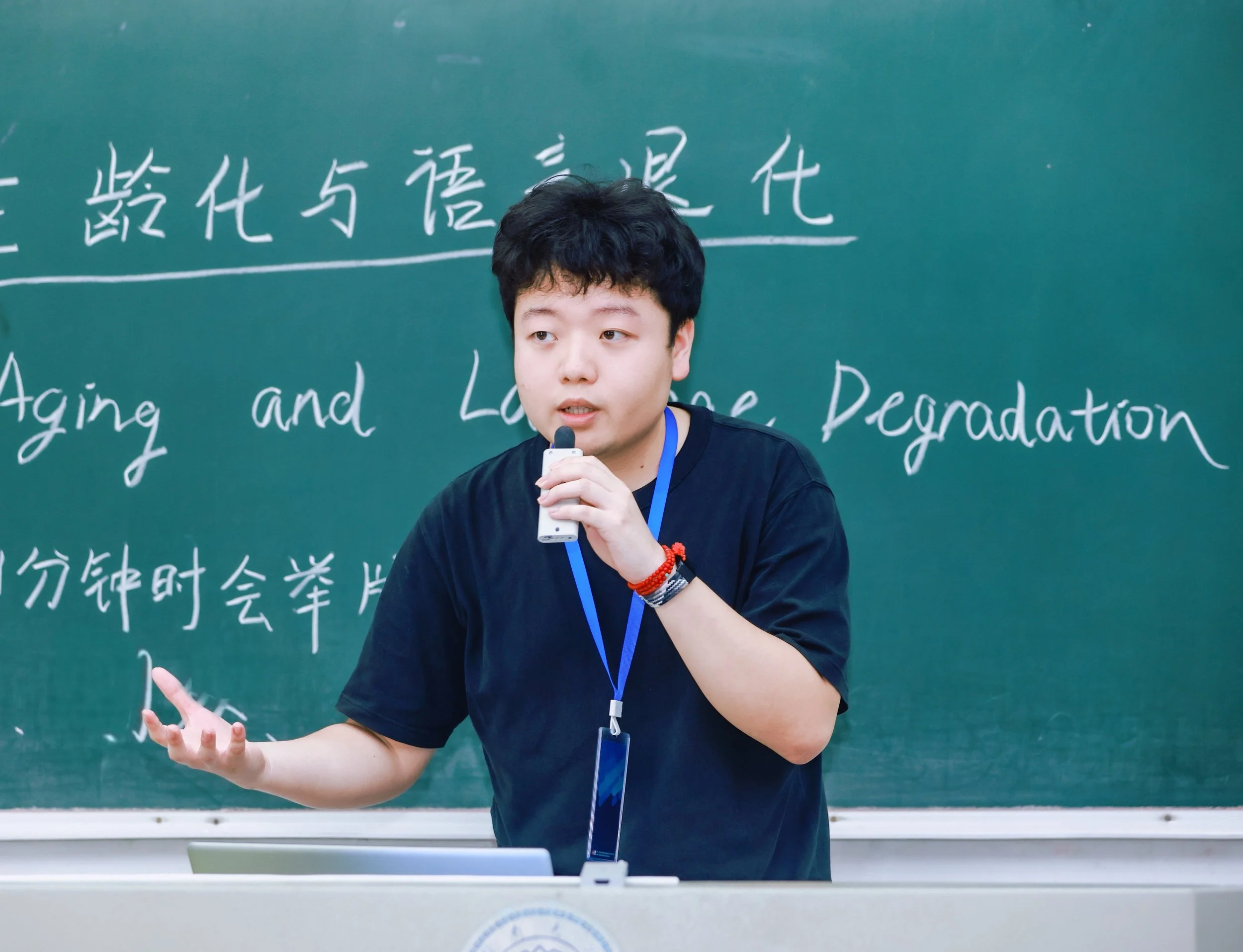
Wenbo WANG
During my undergraduate studies, I was primarily exposed to research in English linguistics and literature, which helped me build a foundational understanding of linguistics, especially its core concepts. In my master's program, with a research focus on second language education, I worked at institutions such as the HKU SPACE, various local Hong Kong secondary schools, international schools in Hong Kong and Shanghai. Through this experience, I encountered many children with language development disorders. Such exposure gradually guided me toward exploring the underlying biological mechanisms of linguistics.
Now, during my PhD research, my research focuses on neurolinguistics, with a particular interest in emerging studies on brain–language model alignment. My co-authored papers have been published at top international conferences such as ACL 2025 and EMNLP 2025.
Beyond studying, I enjoy short trips, playing all kinds of esports games, and doing some cardio exercises. I’m also really curious about exploring the food scene in Hong Kong and mainland China, as well as foreign countries.
| ORCID |

PhD Student
MA in Chinese Linguistics, graduate with Distinction
The Hong Kong Polytechnic University
BA in Chinese Language and Literature
Hubei University
Zirui ZOU
During my undergraduate studies, I majored in Chinese Language and Literature. I have long been interested in Chinese historical linguistics and languages of Sinosphere, and over time I came to realize that linguistics is a field with interdisciplinary nature. After coming to Hong Kong for my MA study, I took Dr. Fong’s course in neurolinguistics, which introduced me to the possibility of studying language from a brain science perspective. This experience amazed me and sparked a lasting fascination with the interaction between the brain and language sciences. Since then, I have fully immersed myself in learning theories and methods of cognitive neuroscience.
I completed my MA under Dr. Fong’s supervision. In my master’s dissertation, I used fMRI to investigate conflict monitoring during phonological processing. I am now continuing my PhD with Dr. Fong. My current research focuses on cognitive control in language processing, particularly the roles of the anterior cingulate cortex and the cerebellum in language. I am also interested in the neural representations of language in the older adults and in patients with mild cognitive impairment (MCI).
Outside of research, I enjoy learning different languages and cultures behind them (e.g., various Chinese varieties, Japanese, and Gaelic languages). I am also a big fan of Japanese anime and Nintendo games.